

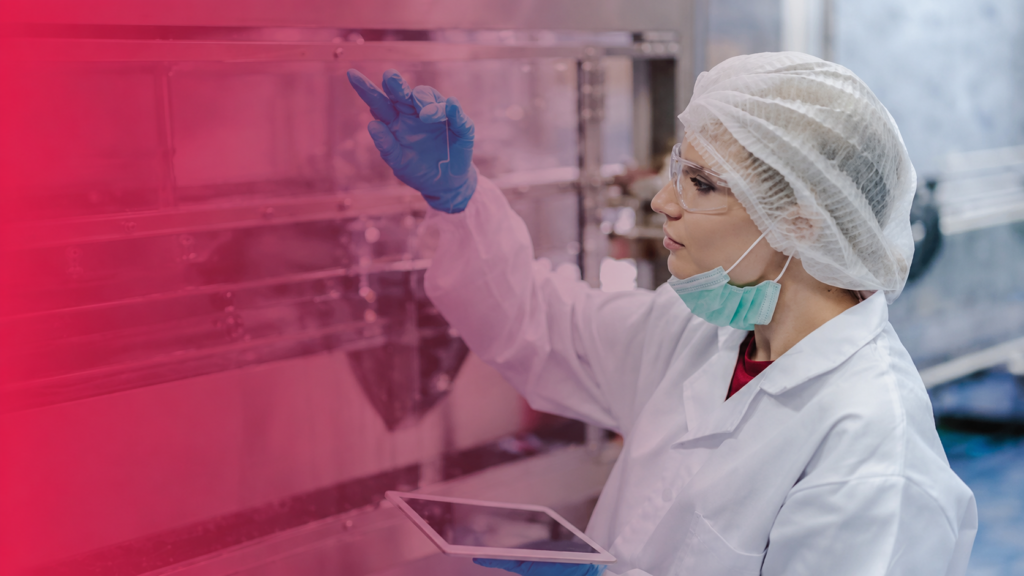
In pharmaceutical and chemical manufacturing, precision and protection define process excellence.
Every stage — from raw material handling to formulation — depends on how effectively powders move between systems. Yet, this seemingly routine step often becomes a hidden source of contamination, product loss, and operator exposure.
The shift toward closed vacuum transfer systems marks a new era in contamination control — where safety, yield, and compliance converge through intelligent engineering.
The Challenge: The Limits of Open Transfer
Manual or semi-open transfer methods — scooping, gravity feeding, or dumping — have served the industry for decades. But as global standards tighten, their limitations have become increasingly visible.
Each open point introduces avoidable risks:
- Dust emission, contaminating cleanrooms and compromising product integrity.
- Material loss, reducing yield and profitability.
- Operator exposure, creating safety and ergonomic concerns.
In a GMP- and OEB-driven environment, even small deviations can result in costly rework, extended downtime, or failed validation. The solution lies not in control after contamination — but in preventing exposure altogether.
The Shift: Containment by Design
A closed vacuum transfer system eliminates the vulnerabilities of open handling.
Through controlled negative pressure, powders are conveyed in sealed stainless-steel pipelines — directly from one process vessel to another.
The result: a fully enclosed, contamination-free, and automated material flow.
At Saan Engineers, this isn’t an adaptation; it’s a design philosophy built on three principles:
- Dust-Free Operation – no airborne contamination during transfer.
- Loss-Free Flow – complete material recovery and batch consistency.
- Risk-Free Handling – safety for operators, purity for products.
Containment isn’t a feature — it’s engineered into every line we build.
The Engineering Edge: Where Precision Meets Purpose
Every Saan vacuum transfer system reflects four decades of engineering expertise and process insight.
Key technical highlights include:
- Optimized vacuum flow dynamics to maintain constant transfer rates.
- HEPA and ATEX-certified filtration systems for air purity and explosion safety.
- Automated valve sequencing for synchronized feeding and discharge.
- CIP (Clean-in-Place) compatibility, minimizing cleaning time and downtime.
Together, these innovations ensure consistent performance, maximum containment, and complete regulatory readiness.
Compliance as a Built-In Standard
Global pharma and chemical companies operate under intense scrutiny — where safety documentation, batch validation, and containment verification are mandatory.
Saan’s closed vacuum transfer systems are designed to align seamlessly with:
- cGMP and ISO standards for hygienic design and documentation.
- OEB 3–5 containment levels for potent APIs.
- FDA and EMA guidelines for cleanroom compliance and operator protection.
This is not compliance through adjustment — it’s compliance through engineering integrity.
The Future Flows in Containment
The next generation of process plants is defined by continuous manufacturing, automation, and digital validation.
Closed vacuum transfer systems will be at the core of this transformation — enabling cleaner environments, safer operations, and fully traceable material flow.
For manufacturers committed to zero dust, zero loss, and zero risk, Saan Engineers provides not just systems, but confidence engineered into every process.
Dust-free. Loss-free. Risk-free.
That’s not a tagline.
That’s a commitment — engineered by Saan.